
The Complete Guide to Custom Design Jewelry Manufacturing
In today’s competitive jewelry market, customization is no longer a luxury — it’s a necessity. Brands and retailers are increasingly turning to custom design jewelry manufacturing to create exclusive collections that stand out.
Whether you are a jewelry enthusiast, a startup brand, or a wholesale buyer looking to sell custom made jewelry online, understanding the professional production process will help you achieve high-quality, scalable results.
This guide walks you through the complete journey from inspiration to final quality control.
1. Start with Inspiration and Market Research
Every successful custom jewelry piece begins with a strong concept.
Design inspiration can come from nature, cultural symbols, vintage styles, fine jewelry trends, or personal stories.
To analyze global trends, platforms like Vogue Jewelry (https://www.vogue.com/fashion/jewelry) and Forbes Luxury (https://www.forbes.com/lifestyle/) regularly publish insights into consumer behavior and luxury markets.
For gemstone knowledge and grading standards, the Gemological Institute of America (GIA) (https://www.gia.edu/) remains one of the most respected authorities in the industry.
Pro Tip: Creating a structured mood board with materials, textures, and color palettes helps streamline communication with your manufacturer.
2. Collaborate with an Experienced Jewelry Manufacturer
A professional custom jewelry manufacturer transforms your idea into a technically feasible design.
At this stage, you should share sketches and reference images, define your target market (retail, wholesale, private label), confirm minimum order quantities, and discuss pricing structure.
For brands selling custom made jewelry online, manufacturing scalability and consistency are critical. Clear communication ensures your final product matches your brand identity.
3. Select High-Quality Materials
Material choice determines durability, price positioning, and long-term customer satisfaction.
Common materials in custom jewelry manufacturing include 925 sterling silver, 14K or 18K gold, natural or lab-grown diamonds, semi-precious gemstones, and enamel or micro pave stones.
If working with diamonds, pricing benchmarks are often influenced by the Rapaport Diamond Report (https://www.diamonds.net/Prices/RapaportPriceLists.aspx), a well-known authority in global diamond pricing.
Always confirm metal purity certification, stone authenticity, and ethical sourcing standards. High-quality sourcing builds long-term brand credibility.
4. CAD Modeling and 3D Prototyping
Modern custom jewelry production relies heavily on CAD (Computer-Aided Design).
Benefits of 3D modeling include precise stone placement, accurate weight calculation, cost estimation before casting, and easy revisions before production.
For wholesale clients, digital renders allow approval before bulk manufacturing, reducing risk and minimizing production errors. This step ensures technical perfection before moving into casting and finishing.
5. Casting, Stone Setting and Finishing
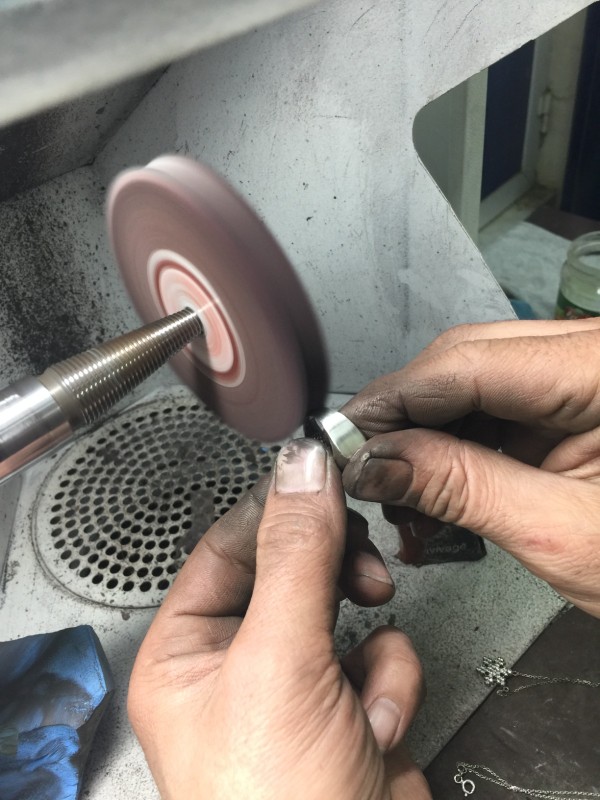
Once the CAD model is approved, the production phase begins with wax model creation, metal casting, stone setting, polishing, and plating if required.
Depending on complexity, this stage may take between one and four weeks. Experienced artisans ensure precision, especially in micro pave and high-detail designs.
6. Quality Control and Final Inspection
Quality assurance is essential in professional jewelry manufacturing.
Inspection includes metal purity testing, stone security checks, surface finishing review, measurement accuracy, and weight verification.
For online jewelry brands, strict quality control reduces return rates and increases customer trust.
Why Custom Jewelry Manufacturing Is a Smart Business Move
Custom design jewelry allows brands to create exclusive collections, increase profit margins, avoid direct price competition, build long-term brand value, and offer private label solutions.
As global demand for personalization continues to grow, custom jewelry consistently outperforms mass-produced collections.
Final Thoughts
Custom design jewelry is more than a creative process — it is a strategic business decision.
By combining market research, professional CAD modeling, high-quality materials, skilled craftsmanship, and strict quality control, you can create timeless pieces that represent your brand identity and deliver long-term customer satisfaction.
If you are planning to launch or expand your jewelry brand, investing in custom jewelry manufacturing is one of the most effective ways to build exclusivity and scalability at the same time.
Reviews